
Ethical Marketing Handshake Reimagined
In 2026, the marketing landscape has shifted from a “data grab” to a “trust exchange.” For years, the industry operated under the shadow of data surveillance, where every click, hover, and heartbeat was tracked, packaged, and sold. However, a new era has dawned. Consumers are no longer passive data points; they are informed participants who demand transparency.
Ethical Marketing is no longer just a buzzword or a compliance checkbox—it is the primary competitive advantage for brands navigating a world of AI-driven surveillance.
The Surveillance Paradox: Why Trust is the New Currency
We live in an age of unprecedented connectivity. AI agents now act on behalf of consumers, and “search everywhere” has replaced the traditional search bar. Yet, as technology becomes more intrusive, the “creepy factor” has reached a breaking point.
Studies in 2026 show that nearly 68% of consumers feel their digital lives are being monitored rather than understood. When personalization happens without explanation or consent, it stops feeling like a service and starts feeling like surveillance. This is where Ethical Marketing steps in to bridge the gap between advanced technology and human respect
The Core Pillars of Ethical Marketing in 2026
To thrive in this environment, brands must pivot toward a strategy that prioritizes the human being over the data string. Here are the three pillars defining successful brands today:
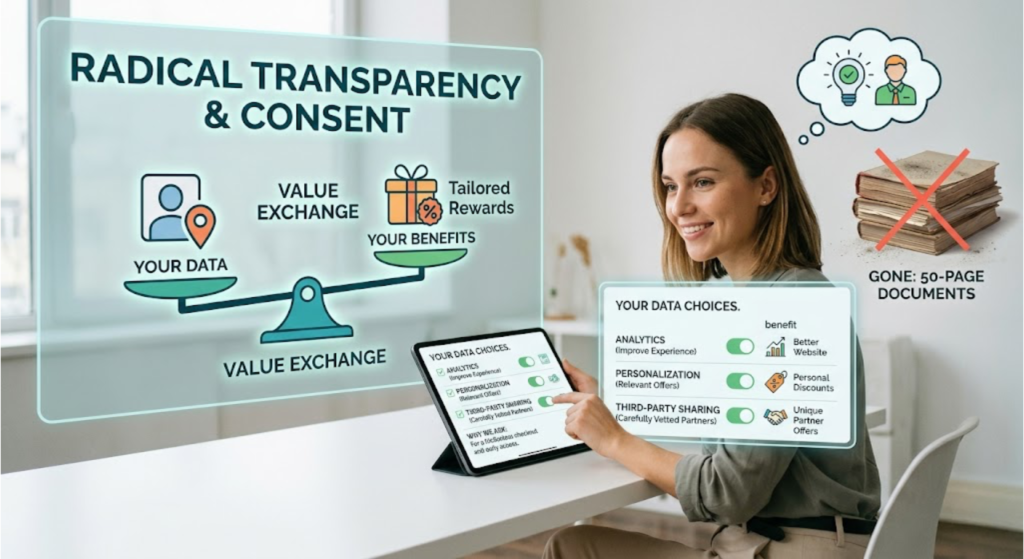
1. Radical Transparency and Consent
Gone are the days of burying data policies in 50-page legal documents. Ethical Marketing demands clear, concise communication.
Layered Consent: Offer users granular choices. Instead of “Accept All,” give them the power to choose which data they share and for what specific benefit.
The Value Exchange: If you want a customer’s data, you must explain exactly what they get in return—whether it’s a tailored discount, a frictionless checkout, or early access to products.
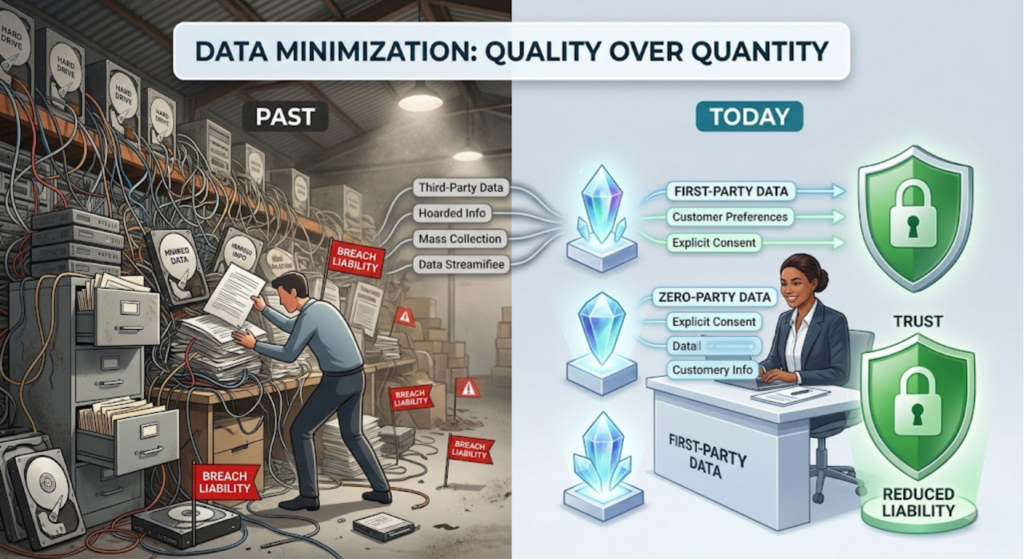
2. Data Minimization (Quality over Quantity)
In the past, marketers hoarded data like digital magpies. Today, the most successful firms practice data minimization. By collecting only what is strictly necessary, companies reduce their liability in the event of a breach and signal to the customer that their privacy is valued. Ethical Marketing focuses on first-party and zero-party data—information that customers willingly share because they trust the brand.
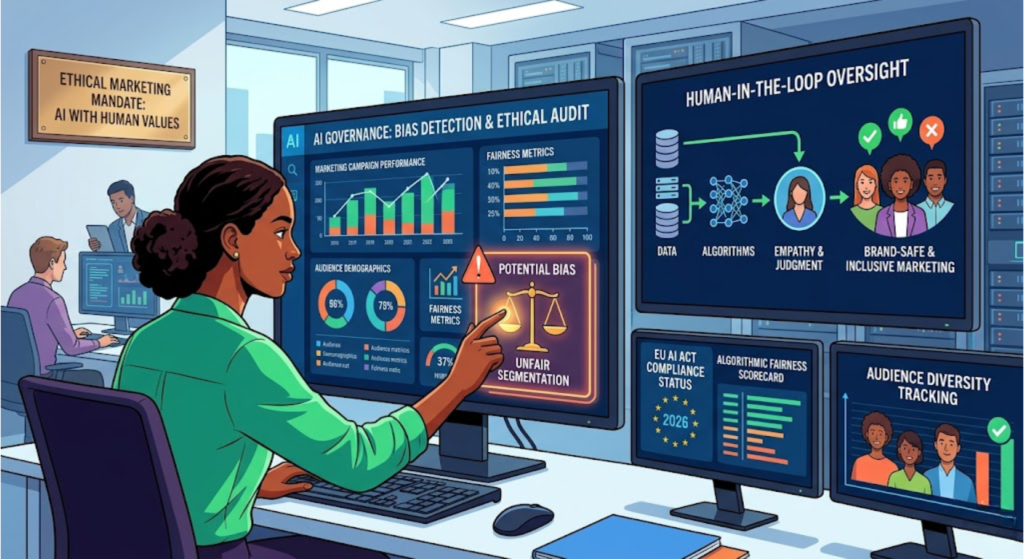
3. AI Governance and Bias Detection
With the full implementation of the EU AI Act and similar global regulations in 2026, Ethical Marketing now involves rigorous oversight of automated systems. Brands must ensure their algorithms aren’t just efficient, but fair.
Human-in-the-Loop: While AI can predict purchase intent, it lacks empathy. Human oversight ensures that marketing remains brand-safe and inclusive, avoiding the discriminatory pitfalls of “black box” algorithms.
Comparison: Surveillance vs. Ethical Approaches
| Feature | Surveillance Marketing | Ethical Marketing |
|---|---|---|
| Data Source | Third-party cookies and hidden trackers | Consented First-party & Zero-party data |
| User Experience | Intrusive and “creepy” | Helpful and transparent |
| Legal Standing | High risk (GDPR/AI Act violations) | Compliance-first and proactive |
| Customer Loyalty | Low (transactional) | High (relationship-based) |
Turning Privacy into a Growth Engine
Many feared that the death of third-party cookies would kill digital advertising. Instead, it gave birth to a more robust form of engagement. When a brand adopts Ethical Marketing, it isn’t just following the law; it’s building a fortress of loyalty.
Research indicates that for every dollar spent on privacy-first initiatives, companies are seeing a return of roughly $2.70 in associated benefits. This “trust dividend” manifests in higher email open rates, lower churn, and a brand reputation that survives the turbulence of the digital age.
Conclusion: The Future belongs to the Transparent
As we move further into 2026, the line between innovation and integrity will define the winners of the marketplace. Ethical Marketing isn’t about doing less; it’s about doing better. It’s about moving away from the “shadows” of surveillance and into the “light” of a transparent, value-driven relationship with the consumer.
By embracing Ethical Marketing, your brand stops being a silent observer and starts being a trusted partner. In the age of data surveillance, the most radical thing a brand can do is simply be honest.