
The way people interact with search engines has changed dramatically over the past few years. Today, users often get their answers without even clicking on a website. This trend, known as zero-click search, is reshaping how businesses approach SEO and search engine marketing. For marketers, this shift is both a challenge and an opportunity to rethink strategies and stay visible in an increasingly competitive landscape.
What Is Zero-Click Search?
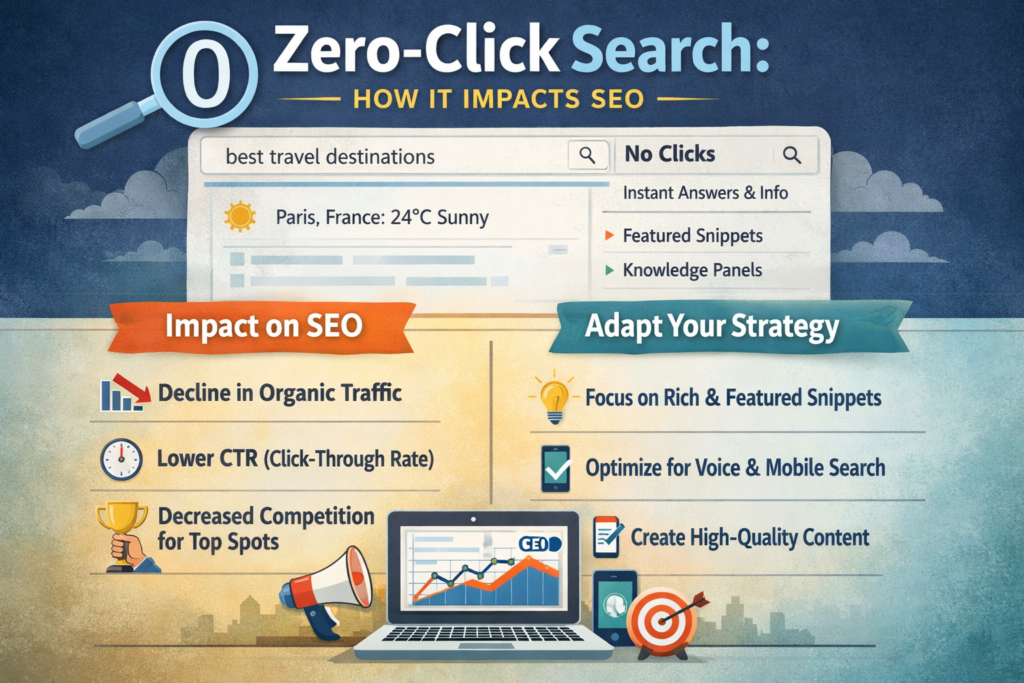
Zero-click search happens when users find the information they need directly on the search results page (SERP), without clicking any link. This can include featured snippets, knowledge panels, local packs, and instant answers. For example, if someone searches for weather updates or quick definitions, they usually get the answer instantly.
This evolution means that traditional tactics in search engine marketing are no longer enough. Ranking #1 is still valuable, but if users don’t click, traffic doesn’t follow.
Why Zero-Click Search Is Growing
There are several reasons behind the rise of zero-click searches. First, search engines aim to improve user experience by delivering faster, more accurate answers. Second, mobile usage has increased significantly, and users prefer quick, concise information on smaller screens. Lastly, advancements in AI have enabled smarter search results.
For businesses relying on search engine marketing, this means adapting to how content is presented, not just how it ranks.
The Impact on SEO
Zero-click searches can reduce website traffic, especially for informational queries. Even if your page ranks high, users might not feel the need to visit your site. This can be frustrating for businesses investing heavily in search engine marketing.
However, it’s not all negative. Zero-click features can increase brand visibility. If your content appears in a featured snippet, it positions your brand as an authority. In this way, search engine marketing becomes more about visibility and trust rather than just clicks.
How to Optimize for Zero-Click Searches
Instead of fighting the trend, smart marketers are learning to work with it. Here are some practical ways to adapt:
1. Target Featured Snippets
Structure your content to answer questions clearly and concisely. Use bullet points, short paragraphs, and headings. This increases your chances of being featured, which is a key goal in modern search engine marketing.
2. Focus on User Intent
Understand what users really want when they type a query. Are they looking for quick answers, detailed guides, or product comparisons? Aligning your content with intent strengthens your search engine marketing efforts.
3. Use Structured Data
Adding schema markup helps search engines understand your content better. This improves your chances of appearing in rich results, making your search engine marketing strategy more effective.
4. Build Brand Authority
Even if users don’t click immediately, repeated exposure builds trust. Strong branding is becoming an essential part of search engine marketing in the zero-click era.
5. Optimize for Local SEO
Local searches often result in zero-click actions like calls or directions. Make sure your business listings are updated. This is especially important for businesses focusing on search engine marketing at a local level.
Measuring Success Differently
In a zero-click world, traditional metrics like clicks and traffic are not the only indicators of success. Impressions, visibility, and engagement on the SERP are equally important.
Marketers need to rethink KPIs and focus on how well their search engine marketing strategy builds awareness and credibility. Sometimes, being seen is just as valuable as being clicked.
The Role of Content in Zero-Click SEO
Content still plays a crucial role, but the approach needs to evolve. Instead of writing only long-form blogs, consider creating concise, answer-focused sections within your content.
Think of your content as a resource that serves both search engines and users. This balanced approach strengthens your search engine marketing strategy and ensures you stay relevant.
Challenges to Watch Out For
While zero-click search offers opportunities, it also comes with challenges. Reduced traffic can impact ad revenue and conversions. Additionally, increased competition for featured snippets means only the best-optimized content wins.
This makes it essential to continuously refine your search engine marketing tactics and stay updated with algorithm changes.
The Future of SEO and Zero-Click Searches
Looking ahead, zero-click searches are likely to increase even more with the growth of AI-powered search experiences. Voice search and virtual assistants will further reduce the need for clicks.
For businesses, the focus should shift from just driving traffic to delivering value. A strong search engine marketing strategy will combine visibility, authority, and user engagement to succeed in this new environment.
Final Thoughts
Zero-click search is not the end of SEO—it’s an evolution. While it may reduce clicks, it opens new doors for brand exposure and authority building. Businesses that adapt quickly will gain a competitive edge.
The key is to embrace change and refine your search engine marketing approach to match user behavior. By focusing on value, clarity, and visibility, you can thrive even in a world where clicks are no longer guaranteed.