
As we move through 2026, the novelty of artificial intelligence has faded, replaced by a critical necessity for responsibility. Ethical AI implementation is no longer just a corporate social responsibility initiative; it is the cornerstone of sustainable brand growth. In an era where consumers are hyper-aware of how their data is used, digital marketers must pivot from “can we do this?” to “should we do this?”
Integrating ethical AI implementation into your digital strategy isn’t just about avoiding lawsuits—it’s about building a brand that customers can actually trust.
The New Standard of Digital Marketing
The digital marketing landscape has been revolutionized by predictive analytics and generative tools. However, with great power comes a significant risk of bias, privacy invasion, and transparency issues. To stay ahead, agencies must prioritize ethical AI implementation to ensure their algorithms don’t inadvertently discriminate or manipulate.
When we talk about ethical AI implementation in marketing, we are focusing on four primary pillars:
Data Sovereignty and Privacy: Respecting the user’s right to own and control their digital footprint.
Algorithmic Fairness: Ensuring that automated targeting doesn’t exclude specific demographics based on biased historical data.
Transparency: Being vocal about when and how AI is interacting with a customer.
Accountability: Having a clear human-in-the-loop (HITL) process to oversee automated decisions.
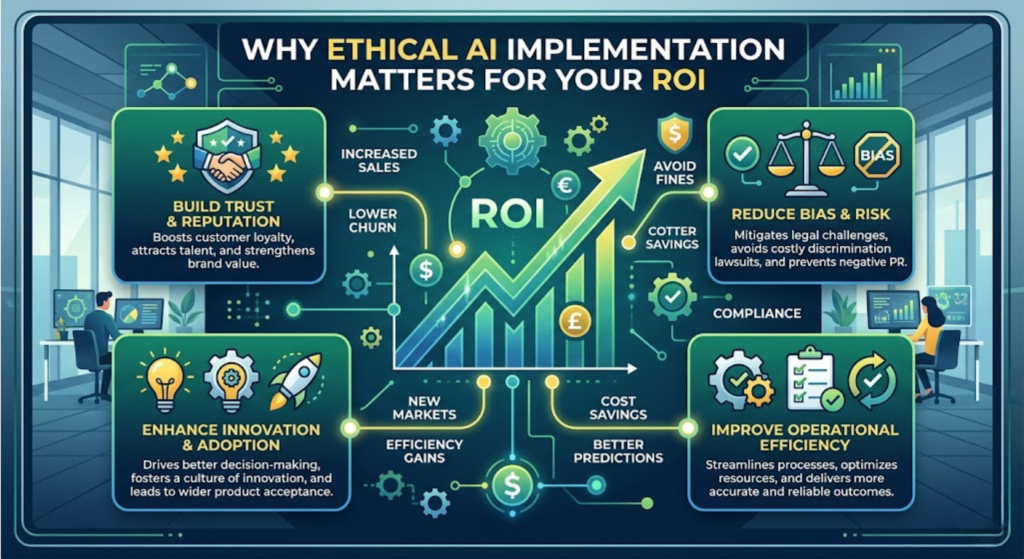
Why Ethical AI Implementation Matters for Your ROI
You might wonder if these ethical constraints throttle your marketing performance. In reality, the opposite is true. Ethical AI implementation actually improves long-term ROI. When a brand is transparent about its AI usage, it reduces “creepiness” and fosters deeper loyalty.
Moreover, search engines and social platforms are increasingly rewarding high-quality, human-vetted content. By focusing on ethical AI implementation, you ensure that your generative content remains authentic and doesn’t trigger the “spam” filters of modern search algorithms.
When we talk about ethical AI implementation in marketing, we are focusing on four primary pillars:
Data Sovereignty and Privacy: Respecting the user’s right to own and control their digital footprint.
Algorithmic Fairness: Ensuring that automated targeting doesn’t exclude specific demographics based on biased historical data.
Transparency: Being vocal about when and how AI is interacting with a customer.
Accountability: Having a clear human-in-the-loop (HITL) process to oversee automated decisions.
Key Steps for Ethical AI Implementation in Your Agency
Transitioning to a responsible framework requires more than just a policy update. It requires a cultural shift in how your marketing team views data.
1. Audit Your Data Sets
The foundation of ethical AI implementation is clean data. If your training data is biased, your marketing output will be too. Regularly audit your CRM and third-party data sources to ensure they represent a diverse and fair sample of your target audience.
2. Prioritize Explainability
Can you explain why your AI recommended a specific product to a specific user? If the answer is “no,” you haven’t fully mastered ethical AI implementation. Use “Explainable AI” (XAI) tools that allow marketers to peek under the hood of the algorithm.
3. Establish a Human-in-the-Loop System
No matter how advanced the model, it lacks human empathy. Ethical AI implementation requires a human editor to review AI-generated ad copy and social posts to ensure they align with the brand’s moral compass and current social sentiments.
The Risks of Ignoring Ethical AI Implementation
Ignoring the ethical side of technology can lead to a “Black Mirror” scenario for your brand. Brands that fail at ethical AI implementation risk:
Public Backlash: Social media moves fast; a biased chatbot or an insensitive automated ad can go viral for all the wrong reasons.
Legal Consequences: With global regulations like the EU AI Act setting the tone, ethical AI implementation is becoming a legal requirement.
Data Degradation: If users don’t trust you, they will provide false data or opt-out entirely, rendering your AI useless.
Looking Ahead: The Future is Transparent
The future of digital marketing belongs to the “Conscious Marketer.” By doubling down on ethical AI implementation, you aren’t just protecting your company; you are contributing to a healthier digital ecosystem.
Ethical AI implementation means choosing models that are energy-efficient, respecting intellectual property rights in generative art, and always putting the consumer’s well-being above a short-term click-through rate.
Conclusion
As we look toward the final half of the decade, the winners in the digital space won’t be those with the fastest algorithms, but those with the most trusted ones. Start your journey of ethical AI implementation today by reviewing your current tools and asking the hard questions. Your customers—and your bottom line—will thank you.
Note: True ethical AI implementation is a continuous process of learning, adjusting, and listening. Stay curious and stay grounded.